




Why do so many Irish surnames start with O’? The answer lies in Ireland’s ancient naming traditions. The prefix O’ originally meant “descendant of” and helped identify a person’s connection to an ancestor or family group.
Today, surnames such as O’Brien, O’Connor and O’Sullivan are recognised around the world. However, their origins stretch back many centuries and tell an important story about Irish heritage, family identity and social structure.
Quick Summary
- O’ means “descendant of”.
- The prefix developed in early medieval Ireland.
- Many Irish families later dropped the O’.
- Some restored it during the Irish cultural revival.
- O’ surnames remain an important part of Irish identity today.
The Meaning of O’ in Irish Surnames
The prefix O’ comes from the Irish word “Ó”, meaning “grandson” or “descendant”. It identified a person as belonging to a particular family line.
For example, O’Brien means “descendant of Brien”, while O’Connor means “descendant of Conchobhar”.
These names helped distinguish one family group from another at a time when communities were organised around kinship and ancestry.
As Irish society developed, these hereditary surnames became established and passed from one generation to the next.
Ireland Was One of the First Countries to Use Hereditary Surnames
Many people are surprised to learn that Ireland was among the first countries in Europe to adopt hereditary surnames.
By the tenth and eleventh centuries, Irish families were already using surnames that would continue through future generations. This happened long before hereditary surnames became common in many other parts of Europe.
As a result, some Irish surnames can be traced back more than a thousand years.
Why Did Some Families Lose the O’?
Not every Irish surname still carries its original prefix.
During periods of English administration, many Irish names were anglicised. In some cases, prefixes such as O’ and Mac disappeared altogether.
For example:
O’Neill became Neill
O’Doherty became Doherty
O’Sullivan became Sullivan
Some families removed the prefix voluntarily to make their names easier to spell or pronounce. Others experienced changes through official records and administration.
Consequently, modern Irish surnames often exist in several different forms.
Why Were Some Prefixes Restored?
During the nineteenth and early twentieth centuries, interest in Irish language and culture grew significantly.
This period saw many families restore traditional forms of their surnames. As Irish national identity strengthened, prefixes such as O’ and Mac became symbols of cultural heritage.
Today, both versions of many surnames continue to exist.
For example, you may encounter both Sullivan and O’Sullivan, depending on the family’s history.
What Is the Difference Between O’ and Mac?
While O’ means “descendant of”, the prefix Mac means “son of”.
Both developed as part of Ireland’s naming traditions.
Examples include:
MacCarthy
MacMahon
MacDonnell
Over time, both O’ and Mac surnames became hereditary family names and remain common throughout Ireland and among Irish communities around the world.
Irish Migration Spread These Names Worldwide
Irish migration helped carry O’ surnames far beyond Ireland’s shores.
Large numbers of Irish people settled in Britain, North America, Australia and New Zealand. As they moved, they brought their family names and traditions with them.
Today, Irish surnames are among the most recognised names in the English-speaking world.
Many people researching their family history discover Irish ancestry through their surname and then begin exploring historical records, migration patterns and family stories.
Why Irish Surname History Remains Fascinating
Irish surnames provide a direct connection to centuries of history. They reveal clues about ancestry, language and cultural identity.
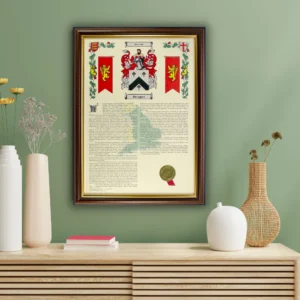
At Hall of Names, we have spent many years researching surname history and heraldry. Our database contains over one million surnames, including thousands of Irish names and traditional sept histories.
Many visitors begin by exploring the history of their surname before continuing their own family history research.
View our Irish Name History Prints
View our blog posts about Irish Names
Frequently Asked Questions
What does O’ mean in an Irish surname?
It means “descendant of” and identifies a connection to an ancestor or family line.
Why do some Irish surnames no longer have O’?
Many surnames lost their prefixes during periods of anglicisation and administrative change.
Is O’ always a sign of Irish ancestry?
In most cases, yes. The prefix has deep roots in Irish naming traditions.
What is the difference between O’ and Mac?
O’ means “descendant of” while Mac means “son of”.
Are Irish surnames among the oldest in Europe?
Yes. Ireland was one of the earliest countries to adopt hereditary surnames.
Visit Us in Dunster
If you are interested in Irish surname history, heraldry and family heritage, we would love to welcome you to our Dunster shop. Our team is always happy to help visitors explore the stories behind their names.

Leave a Reply