






What Does Your Surname Say About Your History?
Surname meanings can reveal fascinating clues about family history. Many surnames began as descriptions of occupations, locations, personal characteristics, or family relationships. Over time, they became lasting links to the past. This guide explores surname meanings, how family names developed, and how learning about your surname can open the door to wider family history research.
Updated April 2026 with additional FAQs and guidance from Hall of Names.
Surnames are more than just a means to identify ourselves. They often carry centuries of meaning, hinting at your family name’s origins, status, profession, or the places that people once called home. Understanding the meaning behind your surname can open a window into your ancestors’ lives and reveal stories you never knew existed.
At Hall of Names, we’ve helped thousands of customers trace the meaning of their surname using our database of over a million names, each linked to its earliest recorded coat of arms. But how exactly can a surname meaning connect you to the past?
Occupational Surnames
Many surnames changed spelling over time as families moved, languages evolved, and records were written phonetically. This means researching surname meanings often involves looking at several historic spelling variations rather than only the modern form.
Many surnames reflect the job that an ancestor once held. Names like Smith, Taylor, or Mason are clear examples of occupational surnames. A surname like Fletcher refers to someone who made arrows, while Chandler once meant a candle-maker.
These names give a direct clue to the kind of work your family may have done, sometimes as far back as medieval times.

Geographical and Locational Surnames
Some names are rooted in places. Surnames like Hill, Wood, or Atwater indicate a landscape feature near where your family once lived. Others, such as London, Devon, or Kent, suggest an origin from a particular town or region.
Locational surnames were especially common among families who moved from one area to another — their name became a label of origin.

Patronymic and Ancestral Surnames
Names like Johnson (son of John), MacDonald (son of Donald), or O’Brien (descendant of Brien) point to family lineage. These types of surnames were particularly common in Scottish, Irish, and Scandinavian traditions, and they help trace a family’s paternal line through generations.
Nicknames and Descriptive Surnames
Sometimes, a surname came from a personal trait. For instance, Short, Brown, or Strong could all have started as descriptive nicknames that stuck. These surnames are a fascinating glimpse into how people were perceived by their communities — whether by looks, strength, or personality.
Cultural Identity and Migration
Surnames can also reflect cultural shifts and migration. A name with Norman, Gaelic, or Anglo-Saxon roots might indicate how your family’s identity evolved over time. In some cases, surnames were adapted or translated as families moved between countries, which makes surname meanings an essential tool in tracing migration paths.
To learn more about how surnames changed across countries and time, take a look at our blog on Irish surnames and their origins.
Why Surname Research Is So Popular
People often begin family history research with their surname because it feels personal and familiar. A family name can lead to discoveries about migration, regional origins, occupations, and historic records connected with earlier generations.
Hall of Names specialises in surname history research with records covering over one million names.
Heraldry and Surname History
When researching a surname, the earliest coat of arms associated with a bearer of the name adds even more historical context. Each design includes colours, symbols, and mottos that reflect values, achievements, or allegiances from centuries ago.
Want to understand what these symbols mean? Read our guide on heraldic symbols and their meanings.
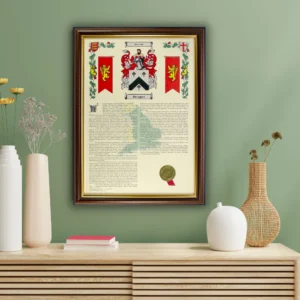
If a coat of arms is available for your name, you can find it by typing your surname into our search box. You’ll even be able to read a brief snippet of information that is available to read in full on our coat of arms and surname history print.
A Personalised Gift with Meaning
Once you’ve discovered your surname’s meaning, why not display it with pride? We offer a variety of hand-finished items featuring the earliest recorded coat of arms for your surname, including:
- Framed Surname History Prints
- Crystal & Glass Coat of Arms Gifts
- Heraldic Wall Shields
- Homeware and Accessories
These make thoughtful gifts for birthdays, weddings, or simply as a way to honour your family legacy.
Celebrate Your Family’s Story
Understanding the meaning behind your surname helps bring your family story to life. Whether rooted in work, place, personality, or ancestry, each name carries clues that connect us to those who came before. With a little research, your surname could reveal a fascinating legacy.
If you’d like to pop in and see us, visit our shop in the historic village of Dunster, at the end of High Street. You’ll be able to search for your family name and see its earliest coat of arms on screen.
Quick Summary
- Surnames often began as references to work, place, or family relationships.
- Family names can change spelling over time.
- Researching a surname can reveal clues about migration and ancestry.
- Many people start family history research with their surname.
- Hall of Names offers personalised surname gifts inspired by historical records.
Frequently Asked Questions
What does my surname mean?
Many surnames began as occupational, locational, descriptive, or family-line names. The exact meaning depends on language, region, and history.
Can a surname show where my family came from?
Sometimes. A surname may suggest a place, language background, or regional origin, although more research is often needed.
Why are there different spellings of the same surname?
Spellings changed over time through dialects, migration, literacy levels, and handwritten records.
Does sharing a surname mean we are related?
Not always. Many surnames arose independently in different places, so further genealogy research is needed.
How can I learn more about my surname?
Many people begin with surname meaning research, historical records, and family history sources linked to their name.
Discover the Story Behind Your Surname
If you would like to explore the earliest historically recorded coat of arms associated with your surname, Hall of Names offers personalised surname history prints, framed artwork, shields, glassware, and heritage gifts inspired by established historical records.
Browse the collection or search for your surname today.

Leave a Reply